Modern vehicles are equipped with dozens of sensors that communicate constantly with the Engine Control Unit (ECU), monitoring emissions, engine timing, safety, and braking systems. When a sensor detects a value outside of normal operating limits, a warning light appears on your dashboard. Understanding the warning light color code system is essential for every driver. Here is our expert guide on decoding dashboard warning lights.
The Traffic Light Color System
Dashboard warning lights follow a standard color-coded hierarchy, similar to traffic lights, to indicate the severity of the fault:
- Red (Immediate Danger): A red light indicates a critical safety hazard or potential engine damage. You must pull over safely and turn off the engine immediately. Examples include the Oil Pressure light (indicating lubrication failure), Engine Coolant Temperature (indicating overheating), and Braking System light. Driving with a red warning light can destroy your engine within minutes or compromise your safety.
- Green/Blue (Information): These lights indicate that a system is active, such as headlights, cruise control, or lane-keep assist. They do not indicate a fault.
- Amber/Yellow (Caution/Action Needed): An amber light indicates a system fault that requires diagnostic inspection. You can usually continue driving, but you should book a service soon. Examples include the Check Engine light, ABS, Airbag (SRS), or Tyre Pressure (TPMS) lights. Leaving these faults unchecked can lead to safety hazards or poor fuel economy.
Decoding the Check Engine Light
The Check Engine light (often shaped like an engine outline) is the most common amber warning light. It can indicate a wide range of issues, from a slow sensor activation to a catalytic converter fault or engine misfire. Because the light is generic, the only way to pinpoint the fault is by plugging in a diagnostic scanner. The scanner reads the specific diagnostic trouble codes (DTCs) stored in the ECU.
Dealer-Level Diagnostics at K66 Motors
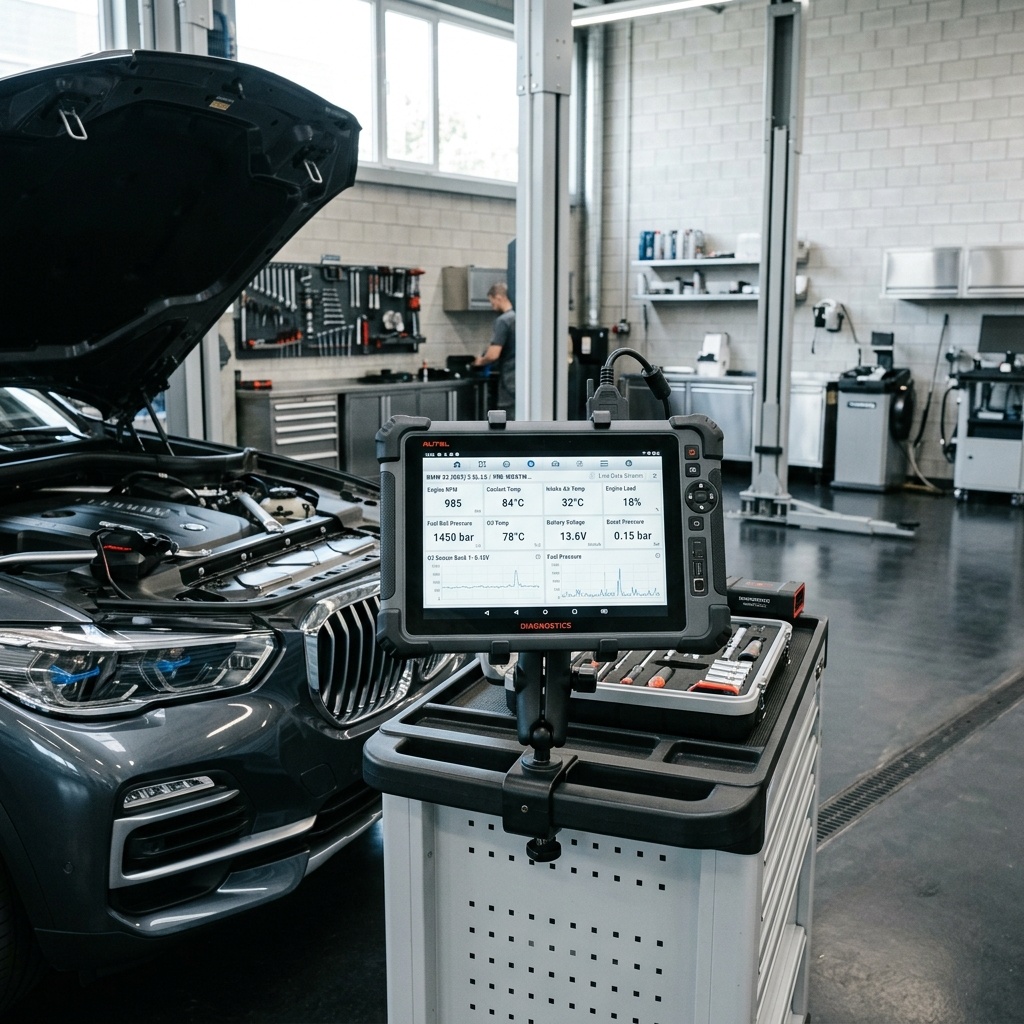
At our McGowan Street workshop, we use advanced diagnostic scanners to read trouble codes, view live sensor telemetry, and perform actuator tests. We diagnose complex wiring faults, reset service indicators, and code replacement components. If a warning light appears on your dashboard, don't ignore it. Book a diagnostics scan with our specialists today.